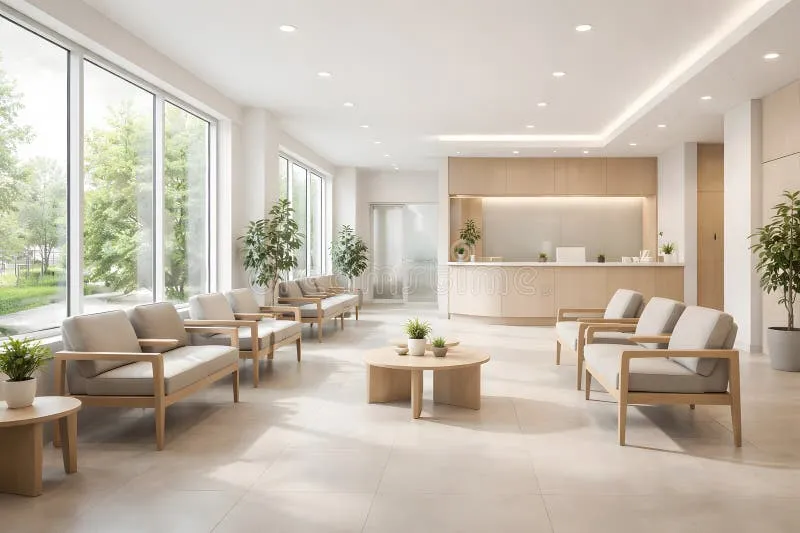
Reading the Room: Why a Clinic's Waiting Area Tells You More Than You Think
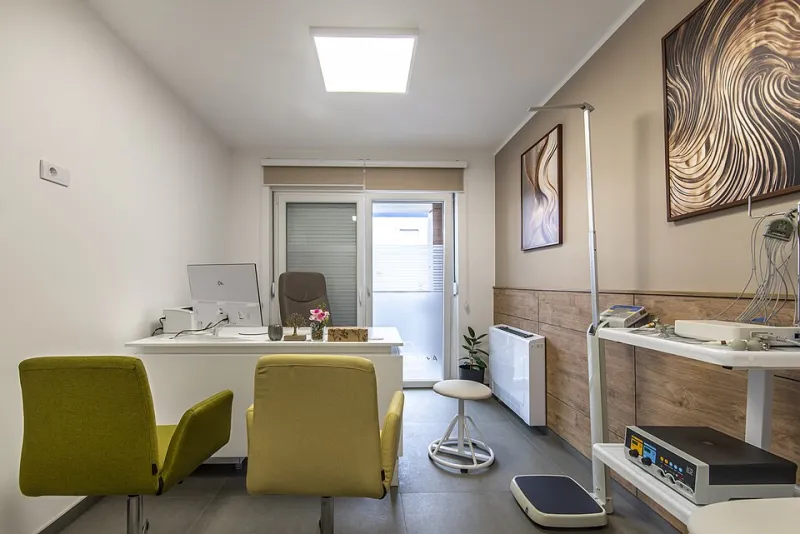
Photo: Shixart1985, CC BY 2.0, via Wikimedia Commons
Patients are often told not to judge a medical practice by its appearance. That advice is well-intentioned, but it gets the relationship backwards. The physical environment of a clinic is not a distraction from the quality of care — it is part of the quality of care. A treatment plan may be written in an exam room, but the experience of being a patient begins at the front door, and it begins forming opinions long before a physician says a word.
The Waiting Room Is Not Neutral Ground
Consider what a waiting room actually asks of people. It asks them to sit, sometimes anxiously, sometimes in pain, sometimes with a restless child, in a space they did not choose and cannot leave. Few other commercial spaces make that demand. A restaurant with uncomfortable chairs loses customers; a clinic with uncomfortable chairs simply loses attention that should be spent on healing.
This is why we believe the design of a clinic's common areas deserves the same seriousness as its clinical protocols. Lighting that is harsh or flickering raises ambient stress. Seating arranged in rows with no consideration for privacy makes it harder for a patient to answer a receptionist's questions honestly. A television blaring daytime programming at full volume signals that no one has thought about what the people in the room might actually need. None of these details determines whether a physician is competent. All of them shape whether a patient feels safe enough to say what is really wrong.
What to Notice When You Walk In
Patients can learn to read a medical office the way a physician reads a chart. The details are there for anyone willing to look.
Light and sightlines. Natural light, where the building allows it, tends to lower anxiety. So does a layout that avoids forcing patients to face a crowd when they check in.
Sound. A quiet room with soft background sound respects the fact that many people in it are worried. A loud room asks them to perform calmness they may not feel.
Privacy at the desk. Watch how the front desk handles personal information. If patients are asked to state their date of birth and reason for visit within earshot of a full room, the clinic has prioritized efficiency over dignity — and that trade-off usually shows up elsewhere.
Seating choices. A mix of seating — chairs with arms for older patients, space for wheelchairs, a corner for families — says a practice has imagined the full range of people who might arrive.
Cleanliness in the corners. Anyone can keep the entryway presentable. Baseboards, upholstery, and children's toy bins reveal whether cleanliness is a habit or a performance.
None of these observations alone is decisive. Together, they form a picture of how much attention a practice pays to things patients can feel but may not know how to name.
Environment Shapes Communication
There is a practical reason this matters beyond comfort. Research on healthcare environments has repeatedly linked physical surroundings to patient outcomes: better-designed spaces are associated with lower reported stress, improved sleep for inpatients, and even reduced need for pain medication. In the outpatient setting, the effect is subtler but real. A patient who feels watched, rushed, or exposed in the waiting room tends to arrive at the exam room already guarded. That guardedness costs minutes — the most precious resource in any appointment.
Conversely, a calm, private, thoughtfully arranged space gives patients a head start on the conversation that matters. The front desk interaction sets the tone: if the first human exchange at a clinic is warm and discreet, patients are more likely to believe the next one will be too.
What We Ask of Ourselves
At a neighborhood clinic, the waiting room is not a formality between the parking lot and the physician. It is where a community gathers — parents with toddlers, older adults managing chronic conditions, working people who squeezed in a visit on a lunch break. Designing for that reality means asking hard questions: Is there room for a wheelchair to sit comfortably among the chairs rather than awkwardly at the end of a row? Can a patient speak to our staff without an audience? Does the space work at 7 a.m. and at 6 p.m., in flu season and in July?
We would offer one honest caveat: a beautiful space with careless medicine is a well-decorated problem. Environment cannot substitute for clinical skill, and patients should weigh both. But the reverse is equally true. A practice that invests in excellent physicians and then ignores the rooms those physicians' patients sit in has misunderstood where care actually happens.
A Closing Checklist
Before your next appointment, anywhere, take sixty seconds to observe:
- Can you hear the person in front of you at the desk — and can others hear you?
- Is there seating that works for your body and your situation today?
- Does the lighting make you want to stay or leave?
- Do staff members move through the space as if they expect people to be comfortable in it?
If the answers are mostly yes, you are likely in a practice that thinks about patients as people. If they are mostly no, it may be worth a conversation — or a second opinion about where you receive your care. The room is telling you something. It is worth listening.