The Care You Never See: How a Satellite Clinic Works Between Your Visits
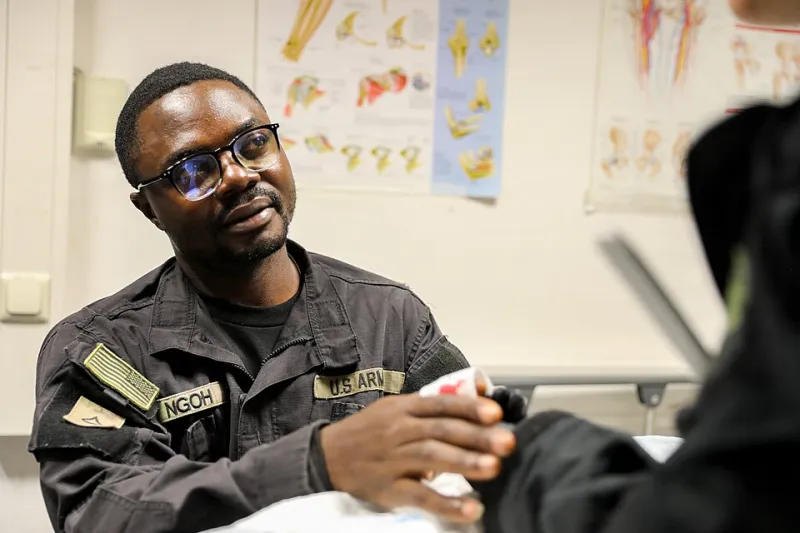
Photo: Sgt. 1st Class Troy Wharton, Public domain, via Wikimedia Commons
Most patients measure a clinic visit in minutes: the drive over, the wait, the conversation with a physician, the drive home. What rarely comes into view is everything that happens in the weeks between—that quiet, deliberate work that turns a single appointment into an ongoing relationship of care.
At Ariyoshi Satellite Clinic, we believe patients deserve to understand what their care team is doing on their behalf, even when no one is in the exam room. Here is a candid look behind the curtain.
Chart Reviews Before You Arrive
Before many appointments, a member of our clinical staff conducts a pre-visit review. Blood pressure trends from prior visits are compared. Outstanding lab results are flagged. Referrals from specialists are checked to confirm that reports have actually made it back to us—a step that catches gaps far more often than you might expect.
This review means that when you sit down with your physician, the visit begins with context rather than catch-up. Ten minutes of preparation can make the fifteen minutes you spend face-to-face considerably more valuable.
The Follow-Up After Your Labs
When lab work is drawn, the work does not end with the result. Abnormal values are triaged and reviewed by a physician, not simply filed away. Borderline findings may prompt a call from a nurse to schedule a recheck. Normal results still generate outreach, because a patient deserves to hear that everything looks fine rather than assume that silence means good news.
If you have ever received a call from our office about a result you had forgotten you ordered, that was not an accident. It was the system working as intended.
Medication Reviews With a Pharmacist's Eye
For patients managing multiple prescriptions, our team periodically conducts structured medication reviews. The questions are practical: Are there duplications? Are there interactions between a new prescription and an established one? Is a refill lapse a sign of a side effect, a cost barrier, or something else worth discussing?
These reviews frequently surface small problems before they become large ones—an over-the-counter supplement that interferes with a blood thinner, or a dosage that no longer matches a patient's kidney function. None of this requires an appointment. It requires attention.
Nurse Check-In Calls That Prevent Visits
Perhaps the least visible service is also the simplest: the check-in call. After a hospitalization, a change in medication, or a new diagnosis, a nurse may call simply to ask how things are going.
These calls serve two purposes. Clinically, they catch early warning signs—a new swelling, a missed dose, a side effect—while they are still easy to address. Practically, they give patients a low-stakes way to ask the questions they did not think of until after the visit ended.
Why Continuity Is the Point
None of this work is dramatic. It is chart review, phone calls, and careful reading of results. But taken together, it represents a fundamentally different model from episodic care, where each encounter stands alone.
When a clinic knows your history—not just your chart, but your patterns, your preferences, your family situation—small changes get noticed. A weight trend, a creeping blood pressure, a lab value drifting in the wrong direction: these are the signals that continuity makes visible.
Our commitment at Ariyoshi Satellite Clinic is to practice medicine proactively, not reactively. The care you never see is, in many ways, the care that matters most. If you have questions about how our coordination process works, or what your care team does with your information between visits, ask at your next appointment. We are glad to show you.