Nine Hours in the Life of a Refill Request: What Really Happens After You Press 'Send'
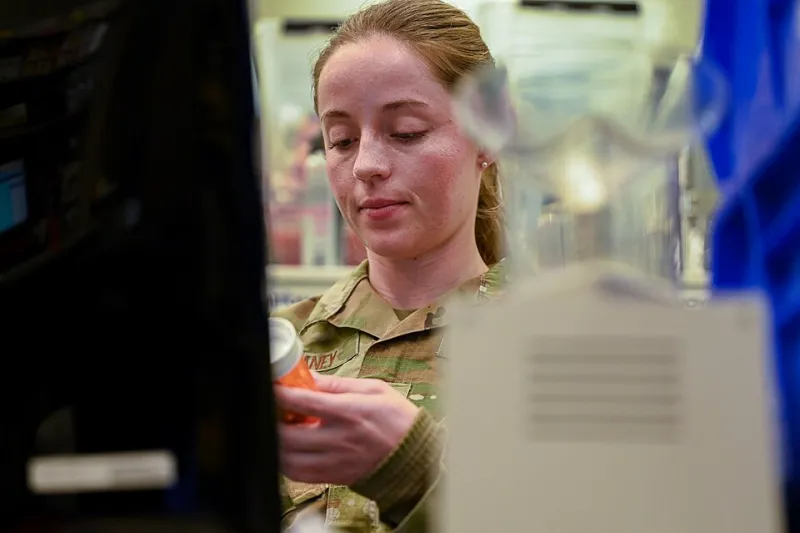
Photo: U.S. Space Force photo by Tech. Sgt. Jordan Thompson, Public domain, via Wikimedia Commons
From the patient's side, a refill request feels simple. You tap a button on the pharmacy app, or you call the clinic's automated line, leave your name and prescription information, and hang up. Then you wait — sometimes a few hours, occasionally a day or two — and the silence in between can feel like indifference.
It is not. What follows is a look at the typical life cycle of a refill request at a community clinic like ours, drawn from the daily routines of our nursing and administrative staff. Understanding this process does more than satisfy curiosity: it helps you request refills in ways that protect you from dangerous gaps in treatment.
Hour One: The Request Arrives
Most refill requests now arrive electronically, routed from the pharmacy's system into the clinic's queue. Others come by phone, patient portal message, or fax. Each request is logged with the same essential details: the medication, the dosage, the prescribing physician, and the date of your last visit.
A trained staff member — often a medical assistant or licensed practical nurse — reviews the request against a checklist. Is this a controlled substance, which carries stricter documentation rules? When was the patient last seen? Is a lab result or blood pressure check required before another fill is safe? These questions are not bureaucratic hurdles; they are the reason refill systems exist in the first place.
Hour Two: Triage and the Nurse's Judgment Call
Many requests are straightforward: the medication is unchanged, the patient was seen recently, and the physician's standing orders permit a refill. In those cases, a nurse may process it directly under a protocol the physician has approved.
But a meaningful share of requests require clinical judgment. A blood pressure medication refill, for example, may prompt a nurse to notice that your last recorded reading was unusually low — or that you are overdue for the lab work that justifies the dose. A request for a sleep aid might trigger a review of interactions with a new prescription from another provider. When that happens, the nurse flags the chart and routes it to the physician, and the timeline lengthens.
This is the step patients rarely see, and it is the step most likely to save them from harm. A refill is never just paperwork; it is a miniature clinical review.
Hours Three Through Six: The Physician's Signature
Requests requiring physician approval land in an electronic queue alongside new patient messages, lab results, and prior-authorization paperwork. Federal and state rules, particularly for controlled medications, require a licensed prescriber's authorization — no delegate can sign in their place.
Physicians typically batch these tasks between patient appointments, often at midday and again at the end of clinic hours. If your request arrives at 4 PM on a Friday, it may wait until Monday morning through no one's negligence. Urgent clinical needs are always triaged ahead of routine refills, which is one more reason to request medications before you are down to your last few doses.
Hours Seven Through Nine: Back to the Pharmacy
Once approved, the prescription travels electronically to your pharmacy, where a pharmacist performs a final safety check. If your insurance plan requires prior authorization — an increasingly common hurdle — the pharmacy sends the request back to the clinic, and our staff submits documentation to your insurer. Prior authorizations can add days to the process, which is frustrating but rarely avoidable. Our billing coordinators work these cases daily and can often expedite them when a patient is at risk of running out.
How to Make the Process Work for You
Patients hold more influence over this timeline than they may realize. A few practices reliably shorten it:
- Request refills at seven days remaining, not two. This buffer absorbs weekends, insurance delays, and physician review.
- Use the patient portal rather than the phone when possible. Electronic requests carry complete medication details and reduce transcription errors.
- Name the pharmacy. Requests that specify where to send the prescription eliminate a round of phone tag.
- Keep your scheduled appointments. Many refills stall simply because a required follow-up visit is overdue.
- Tell us if you are out. A patient who has missed doses changes the urgency, and our staff will treat it accordingly.
The Quiet Lesson
The refill request is easy to dismiss as clerical work, but it is really a small act of ongoing clinical oversight — a system designed to catch problems between visits. At a neighborhood clinic, the people running that system are the same faces you see in the hallway, which is precisely why the process tends to move faster here than it might at a larger, more impersonal institution.
The next time you press "send" on a refill, know that a chain of careful hands picks it up. Give it the head start it deserves, and it will almost always get your medication to the counter before you need it.